
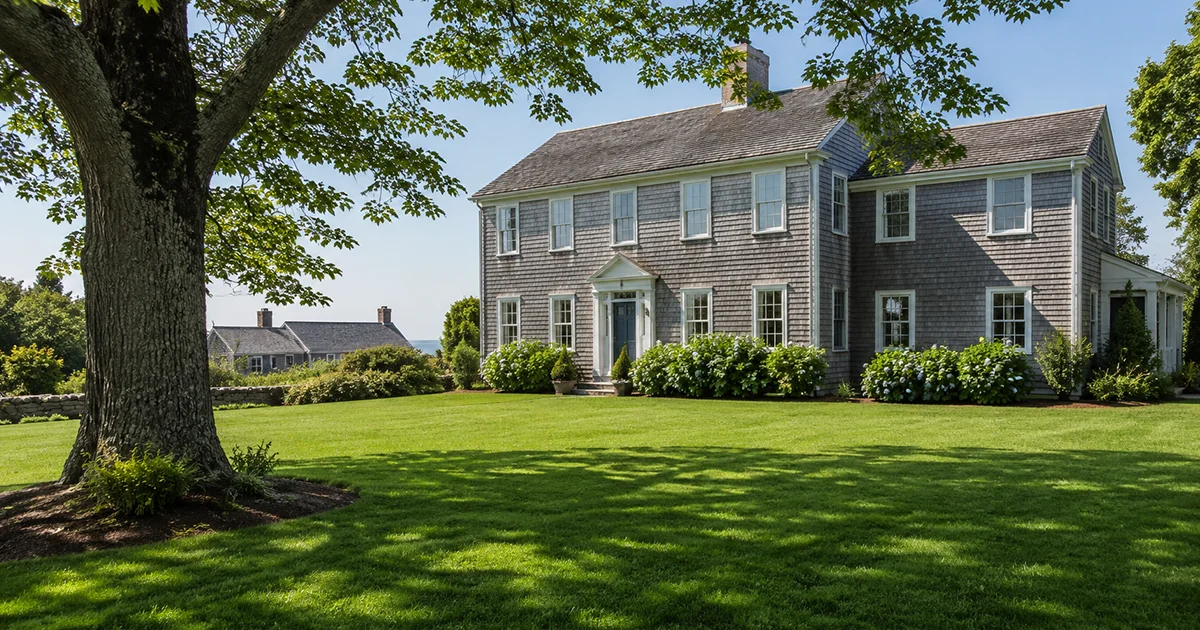
Lawn Care in Vineyard Haven, Martha’s Vineyard: A Property Owner’s Local Guide
TL;DR: Vineyard Haven, officially the town of Tisbury, is Martha’s Vineyard’s only year-round ferry port and the island’s most consistently inhabited community. Its older lots, mature shade trees, harbor salt exposure, and compacted residential soil create lawn care challenges that are specific to this town. This guide explains what those conditions are, which grass types perform best here, and how a year-round care plan keeps Vineyard Haven properties looking their best through every season.
Vineyard Haven is where Martha’s Vineyard begins for most visitors. It’s the ferry port, the town where the shops stay open through January, and one of the island’s oldest working communities. It’s also where some of the most maintenance-demanding residential lawns on the island can be found.
Unlike the wide-open estate lots common in other island towns, Vineyard Haven’s residential character is shaped by density, shade, and age. Greek Revival homes built for 19th-century mariners stand beneath canopies of mature oaks and elms. Closer to the harbor, salt air drifts through neighborhoods year-round at a concentration most coastal towns don’t experience. And because Vineyard Haven has a genuine year-round population, its properties need attentive care in November just as much as they do in June.
If you own property here, the lawn care approach that works for the rest of the island may not work for your yard. Our team at Estate Care has spent years working in Vineyard Haven’s older neighborhoods, and we’ve learned that effective care in this town starts with understanding its specific conditions. Here’s what those conditions are and what to do about them.
What Makes Lawn Care in Vineyard Haven Different From the Rest of the Island?
Vineyard Haven lawns face a combination of challenges rare in other island towns: deep shade from mature trees, persistent harbor salt exposure, and soil compaction built up across generations of dense residential use. These three factors interact and compound each other. A shaded lawn under a century-old oak that’s already stressed by compacted roots is far more vulnerable to salt spray damage than an open lawn on well-drained sandy soil. Understanding how these forces work together is the foundation of any effective care plan for a Vineyard Haven property.
The town’s year-round population also means there’s no quiet “off season” when a lawn gets a break from foot traffic and the wear of daily life. That makes proactive, data-driven care here more important than in any purely seasonal community.
The Character Behind the Challenges: Older Homes, Older Trees, Older Soil
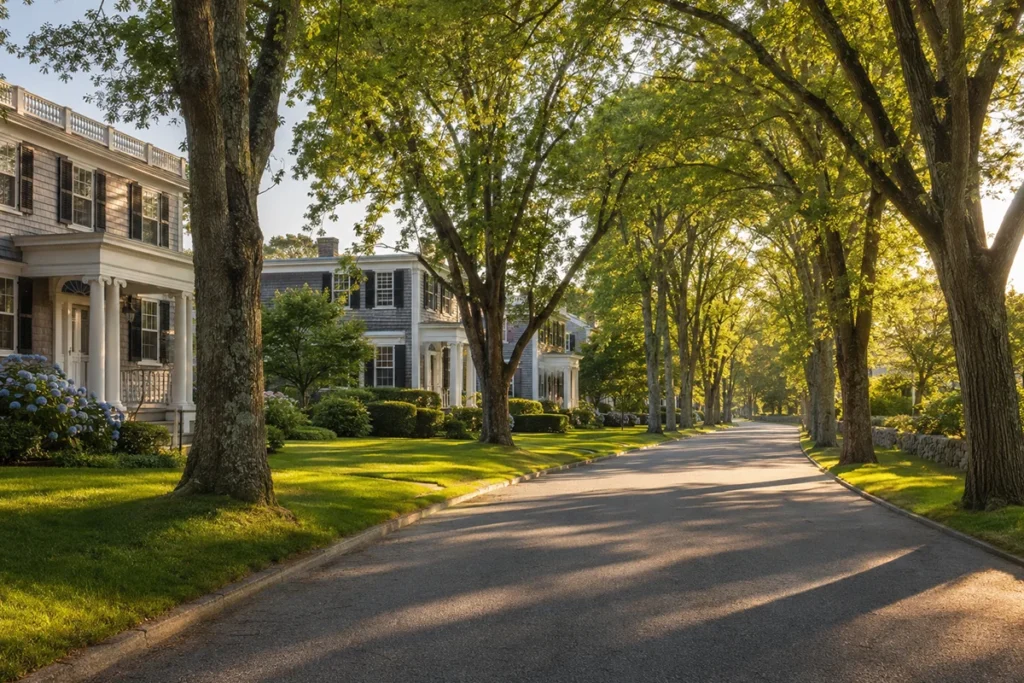
Vineyard Haven (officially Tisbury, though the names are used interchangeably, and “Vineyard Haven” is the more widely searched term) was once one of early New England’s busiest maritime ports. The residential streets that grew up around that history are among the most architecturally distinctive on the island. The William Street Historic District alone contains 56 contiguous structures, most built in the mid-1800s for mariners and merchants, set beneath mature shade trees along a J-shaped lane above the harbor. According to Viewpoints MV, construction on William Street began with Captain Richard Luce in 1833, and the Greek Revival homes that followed were designed to last generations.
Those trees are beautiful. They’re also one of the most significant lawn care factors in Vineyard Haven. Oaks and elms planted in the 19th century have root systems that spread far beyond their canopies, competing with grass for water and nutrients. Their canopies block direct sunlight across large portions of many front yards. And the decades of foot traffic and mowing around their bases has created soil compaction that restricts the movement of air, water, and nutrients to the root zone.
Older residential neighborhoods carry accumulated soil pressure that newer developments don’t have. In Vineyard Haven, this means that standard lawn care approaches often underperform not because the products are wrong, but because the soil hasn’t been properly prepared to receive them.
How Does Shade From Mature Trees Affect Your Lawn?
Fine fescues, specifically creeping red fescue, are the best-performing grass varieties for Vineyard Haven’s heavily shaded lots. They tolerate as few as four hours of filtered sunlight per day, thrive in sandy or slightly acidic soils common to older island properties, and show better salt resistance than Kentucky Bluegrass or perennial rye. Standard grass mixes designed for open, sunny lawns will not establish well under a mature tree canopy.
According to the University of Connecticut’s Home Garden Extension, fine fescues are the most shade-tolerant cool-season grasses available in New England, with a minimum light requirement of four hours per day. This is the threshold that defines what’s achievable in Vineyard Haven’s shadiest yards. Perennial rye and Kentucky Bluegrass need considerably more light to stay healthy, which is why homeowners who overseed with generic mixes see thin, patchy results that never fully fill in.
Choosing the right grass variety for your actual light conditions, and overseeding at the right time of year, is one of the highest-return adjustments a Vineyard Haven homeowner can make. Aeration and overseeding done in early fall, when soil temperatures are still warm and weed competition is lower, gives shaded grass the best possible window to establish before the following summer’s heat.
What Does Soil Compaction Do Under Vineyard Haven’s Trees?
In heavily compacted soil, grass roots can’t reach the depth needed to access water during dry periods, and the tree’s own roots struggle to take in the oxygen they require. The result is a lawn that deteriorates from two directions at once: the grass thins from shallow root depth while the tree’s health also declines.
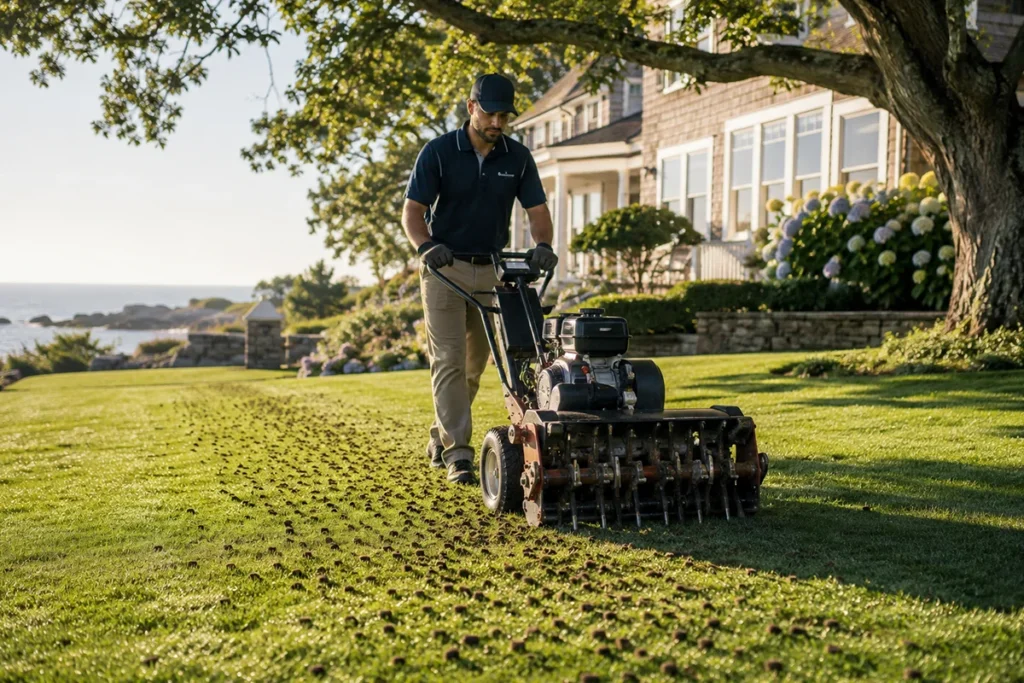
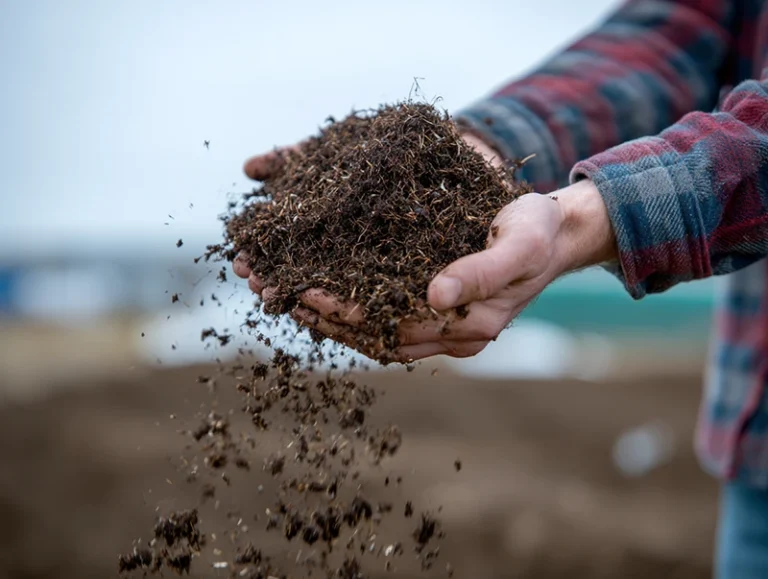
Research from the Rhode Island Tree Council confirms that core aeration around mature trees, performed once or twice a year, creates channels that restore air and water movement through compacted soil. Core aeration removes small plugs of soil rather than simply spiking the surface, which is the only method that meaningfully decompacts soil in older residential settings. Following aeration with shade-appropriate overseeding and a top-dressing of organic matter completes the restoration sequence for both lawn quality and soil biology.
Our soil testing service is often the right starting point for Vineyard Haven properties with persistent lawn issues. Soil chemistry under older trees frequently differs from the rest of the lawn: more acidic, lower in available phosphorus, and with reduced microbial activity. A soil test tells you exactly what program your lawn needs before any product is applied.
How Does Harbor Salt Exposure Affect Vineyard Haven Lawns?
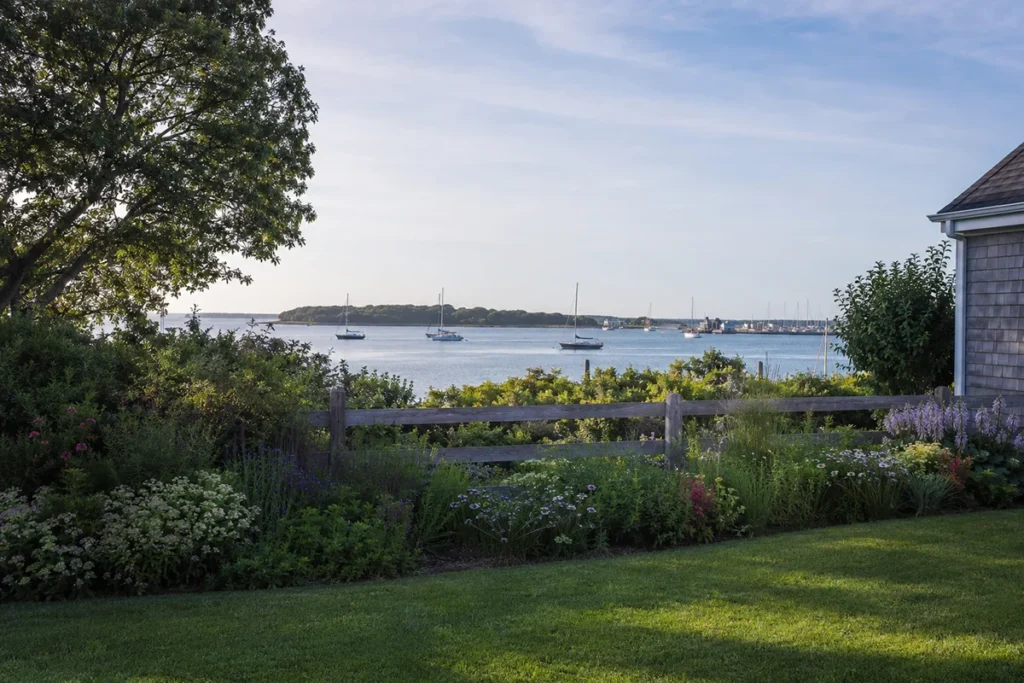
Salt spray from Vineyard Haven harbor is a consistent, year-round stress factor for properties near the waterfront. Salt is a desiccant: it pulls moisture from plant tissue, damages grass cuticles, and creates entry points for fungal pathogens. According to Vineyard Power Washing’s coastal property guide, properties within five miles of the ocean are at elevated risk for salt-related damage, with harbor-facing properties experiencing the most concentrated exposure.
For lawns, the practical response is threefold. First, choose salt-tolerant grass varieties. The UMass Extension turf program rates fine-leaved fescues as significantly more salt-tolerant than bluegrass or rye, making them the clear choice for harbor-adjacent properties. Second, irrigate during dry stretches to help salt dilute and drain through the soil profile rather than accumulate at root level. Third, avoid fertilizer programs that add sodium-based compounds, which worsen salt stress. Mass.gov’s coastal landscaping guidelines recommend replacing lawn entirely with established salt-tolerant native plantings in the most exposed zones near the waterfront, an approach that aligns with Estate Care’s organic, stewardship-first philosophy.
For hardscape surfaces near the harbor, including patios, walkways, and entry paths, salt deposits from winter months should be professionally removed each spring before they cause surface damage. Vineyard Power Washing and ClearView offer soft-wash exterior surface cleaning that lifts salt residue from pavers and masonry without the pressure that damages older stonework common to Vineyard Haven’s historic properties.
Year-Round Care in Martha’s Vineyard’s Only Year-Round Town
Most seasonal lawn care content is written for properties that sit largely unoccupied in the off season. Vineyard Haven is different. With a year-round population of approximately 4,800 and status as the island’s only all-season ferry port, Vineyard Haven properties experience foot traffic, weather stress, and maintenance needs in every month of the year. That makes the approach to lawn care here less about seasonal “opening” and “closing” and more about a rolling, consistent rhythm.
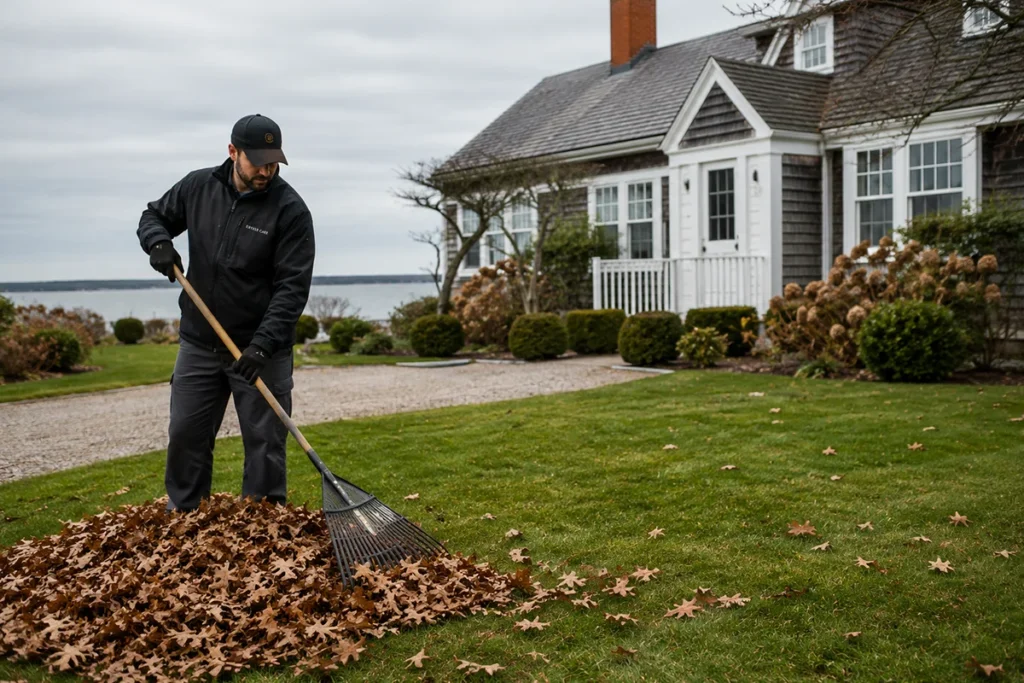
Fall aeration and overseeding repair summer damage and set up the lawn for the following year. Winter brings salt accumulation on walkways and frost heave on older masonry. Spring cleanups in Vineyard Haven typically involve more debris than other island towns given the harbor’s exposure to northerly and westerly storms. Summer care rounds out the year with mowing height management, irrigation monitoring, and watching for fungal issues in shaded areas where air circulation is low.
For property owners who don’t want to track all of this themselves, our property care and estate management service provides a single point of contact that handles the full year. It’s a particularly strong fit for Vineyard Haven’s mix of full-time residents and absentee seasonal owners who treat the town as their primary island home and need reliable coverage even when they’re not present.
This article is the third in Estate Care’s six-town series covering the distinct lawn care conditions in each Martha’s Vineyard community. The series continues with West Tisbury, Chilmark, and Aquinnah in the months ahead.
Vineyard Haven rewards property owners who understand its specific conditions: the shade, the salt, the older soil, and the year-round wear that comes with being the island’s working heart. A lawn care plan that doesn’t account for these factors will underperform, no matter how much effort goes into it.
Our Vineyard Haven service area page outlines everything we offer throughout Tisbury, from precision mowing and shade-tolerant overseeding to full estate management contracts. If you’re not sure where to start, a soil test is almost always the right first step. It tells you exactly what your soil needs before any program begins.
Get a customized care plan for your Vineyard Haven property. Our specialists know this town, its trees, and its rhythms, and we’re here year-round, just like you are.
Frequently Asked Questions
What grass grows best in shaded Vineyard Haven yards?
Fine fescues, particularly creeping red fescue, are the best choice for shaded Vineyard Haven lots. They tolerate as few as four hours of filtered sunlight per day and perform significantly better than Kentucky Bluegrass or perennial rye in low-light conditions. They also show higher salt tolerance than other cool-season grasses, which matters for properties near the harbor.
How often should I aerate the soil under my mature oaks or elms?
Aeration under mature trees should be performed once or twice a year, ideally in early fall when soil temperatures are still warm. Core aeration, which removes plugs of soil rather than simply spiking the surface, is the most effective method for restoring air and water movement through compacted root zones. For heavily shaded areas, follow aeration immediately with shade-appropriate overseeding.
How far does harbor salt spray reach in Vineyard Haven?
Coastal property research indicates that salt spray can affect lawns and plants on properties within five miles of open water, with the highest concentration within a half-mile of the shoreline. In Vineyard Haven, harbor-facing properties on Main Street and along Owen Park are most exposed. Salt stress is reduced by selecting salt-tolerant grass varieties, irrigating during dry periods, and avoiding fertilizers with sodium compounds.
Does Estate Care offer lawn care services in Vineyard Haven year-round?
Yes. Estate Care services all six Martha’s Vineyard towns throughout the year, including Vineyard Haven. Given that Vineyard Haven is the island’s only year-round community, we maintain active service schedules here in every season, not just spring through fall. Year-round and estate management clients in Vineyard Haven receive monthly service visits, detailed post-visit reports, and priority scheduling for storm response.
What is the first step if my Vineyard Haven lawn has thin or patchy grass?
A professional soil test is the right starting point. Thin, patchy grass in Vineyard Haven is most commonly caused by one or more of three conditions: the wrong grass type for the available light, compacted soil under mature trees, or salt stress from harbor proximity. A soil test identifies which factors are at play and at what severity, so the care program addresses the actual cause rather than the symptom.
Questions About Your Property?
Our team is always happy to talk through your specific situation - no commitment required.