

What Is Estate Property Management on Martha’s Vineyard? What It Should Actually Include
TL;DR: Estate property management on Martha’s Vineyard means one team handles your lawn, landscape, irrigation, masonry, and storm response, then reports back so you always know your property’s condition. It is not the same as a basic lawn care contract. This guide explains what a real estate management agreement should include, what can go wrong on an unwatched MV property, and how to evaluate a provider before you sign. Book a consultation to get a custom plan for your property.
About 62% of Martha’s Vineyard’s housing stock is seasonal or second-home use, according to the Martha’s Vineyard Commission’s seasonal population estimate. If you’re one of those owners, you already know the feeling: you lock the door in September and don’t see your property again until May or June. Estate property management on Martha’s Vineyard is the service built for exactly that gap.
You don’t need acres of land or a name for your property to get this level of care. Every client gets the same standard of attention, whether the lot is a quarter acre in town or a multi-acre spread up-island. The goal is simple: once we’re on the job, the problems that used to keep you up at night quietly disappear. Your only task is to show up. Everything else, the lawn, the garden, the irrigation, the storm cleanup, is already handled before you arrive.
It’s also a term that gets used loosely. Some companies call basic mowing “property management.” Others mean a full coordinated program covering every trade your house needs. The difference matters, especially when you’re trusting someone with a property you can’t check on yourself for months at a time. This guide breaks down what real estate management should include, what happens when a Vineyard property goes unwatched, and how to tell a serious provider from a seasonal crew with a new label.
What Does “Estate Property Management” Actually Mean on Martha’s Vineyard?
Estate property management means one company coordinates every exterior service your property needs, lawn, garden, irrigation, masonry, and storm response, under a single point of contact who reports back to you regularly. It goes well beyond mowing the grass.
On the Vineyard, that distinction carries real weight. A typical lawn care contract covers turf: mowing, fertilizing, maybe aeration. A complete property care program covers the entire estate. That means someone is walking your patios and stone walls for frost damage, checking your irrigation system before a cold snap, watching for storm debris after a nor’easter, and coordinating outside specialists like arborists or electricians when something falls outside the core scope. You get one phone call to make instead of five vendors to manage from 400 miles away.
What Can Go Wrong on an Unwatched MV Property in Six Months?
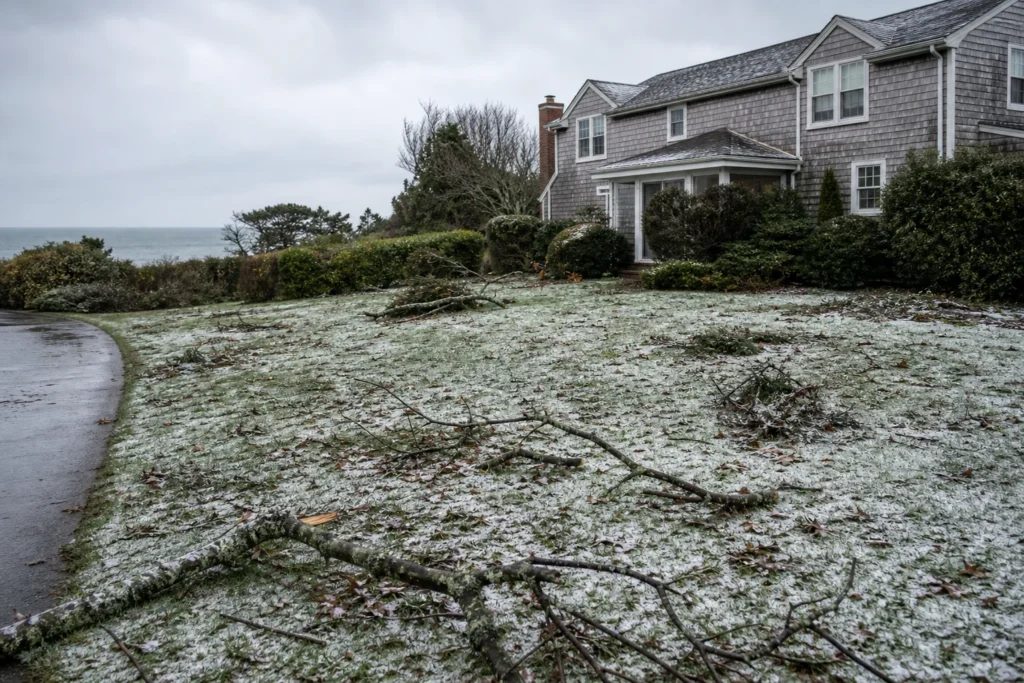
A lot can go wrong on an island property left unattended for half the year: frozen and burst irrigation lines, storm damage that goes unnoticed for weeks, pest entry through small gaps, and lawn or garden decline that takes a full season to reverse.
The Vineyard’s winter weather makes this risk concrete, not theoretical. In February 2026, a blizzard dropped more than 18 inches of snow on the island in a single storm, one of the heaviest single-storm totals in recent years. Nor’easters typically hit the island one to three times each winter between November and March. If a tree limb cracks a section of fence or a gutter pulls loose during one of those storms and nobody is there to see it, the damage usually compounds before anyone notices it in May. Insurers have taken note of the island’s rising storm exposure too: Martha’s Vineyard homeowners are seeing insurers pull back coverage at rates comparable to hurricane-prone Florida, which makes a documented, well-maintained property more valuable at renewal time, not just for curb appeal.
Pests add a quieter risk. As temperatures drop each fall, rodents and overwintering insects look for warm, undisturbed shelter, and an empty house with small entry points is exactly what they’re looking for. A property that gets regular walkthroughs catches these problems in week one. A property that doesn’t catches them in May, often as an active infestation.
Why Coastal Conditions Make This Riskier Here Than Inland
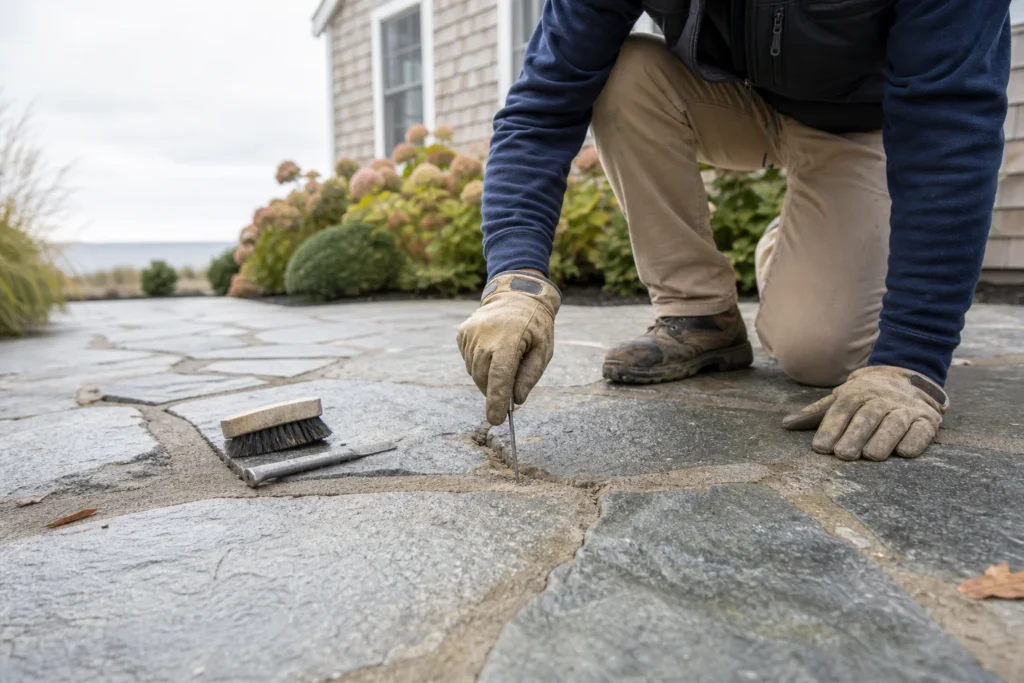
Martha’s Vineyard’s coastal exposure changes the maintenance math compared to a mainland property. Salt air, sandy soil, and a deep frost line all work against an unmonitored house faster than they would 50 miles inland.
Start with the ground itself. New England’s frost line can reach 48 to 52 inches below the surface during a hard freeze, but most residential irrigation lines sit only 12 to 18 inches deep to avoid damage during routine yard work, according to industry data on regional frost depth. That gap is exactly why irrigation systems need a proper fall shutdown. A single hard freeze on a system that wasn’t blown out and drained can crack pipes, break sprinkler heads, and fail valves, and Massachusetts homeowners are advised to winterize before the first hard freeze, typically by mid-October on the island.
Salt does its own slow damage to hardscape. Salt-laden moisture works into mortar joints, then leaves crystals behind as it dries, and those crystals expand and gradually weaken the bond between mortar and stone. Within a mile of the coastline, which describes most of the Vineyard, that process moves faster than it would inland, and coastal hardscape generally needs more frequent inspection and resealing than mainland installations. A managed property gets that hardscape checked on a schedule, not after a homeowner happens to notice a crack from the kitchen window during a July visit.
What a Full-Service Estate Management Contract Should Include
A real estate management contract should name specific, recurring services, not vague promises to “keep an eye on things.” Here’s what belongs in a properly scoped agreement on Martha’s Vineyard:
| Service Area | What It Should Cover |
|---|---|
| Lawn and turf | Mowing schedule, fertilization program, aeration timing, soil-based pH management |
| Garden and landscape | Bed maintenance, seasonal planting, pruning, mulching, plant health checks |
| Irrigation | Spring startup, in-season monitoring and adjustment, fall winterization |
| Hardscape and masonry | Scheduled inspection of patios, walkways, retaining walls; small repairs before they grow |
| Seasonal transitions | Spring property opening, fall closing, seasonal cleanups after storms |
| Trade coordination | Sourcing and managing arborists, electricians, painters, and other specialists as needed |
| Reporting | Written or photo documentation after every visit, with a single point of contact |
If a proposed contract skips reporting, irrigation management, or hardscape inspection entirely, ask why. Those three gaps are the most common reasons absentee owners get an unpleasant surprise mid-season.
What Makes a Post-Visit Report Worth Paying For?
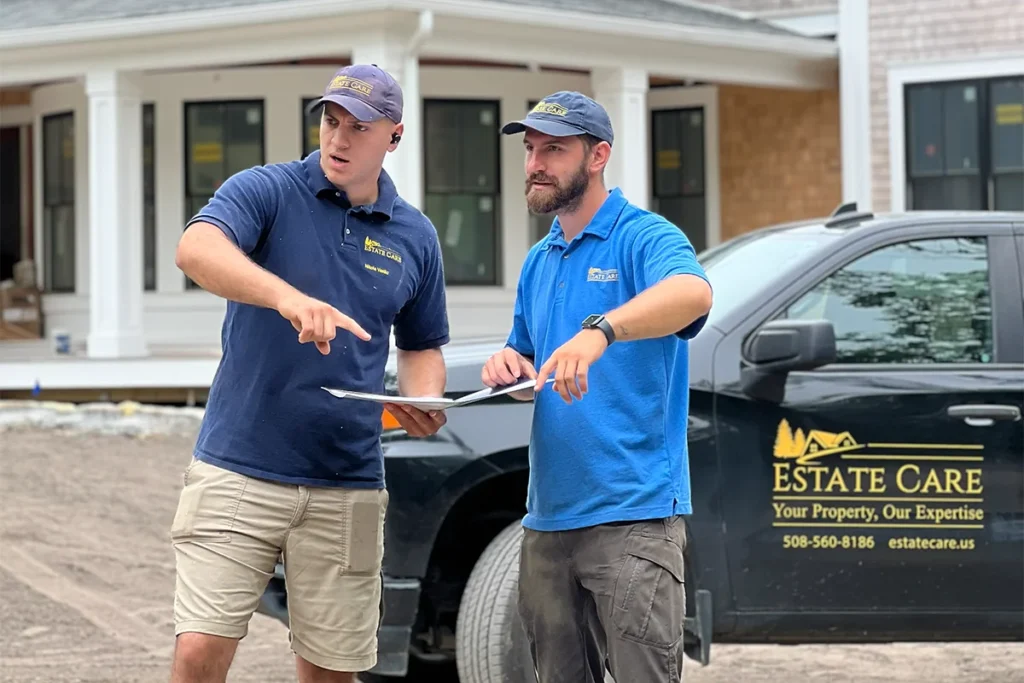
A post-visit report matters because it replaces guesswork with documentation. Instead of wondering what happened on your property last week, you get a written or photo record of what was checked, what was done, and what to plan for next.
This is where a lot of basic service contracts fall short. A mowing crew shows up, cuts the grass, and leaves. There’s no record unless something visibly went wrong. An estate management report, by contrast, creates a paper trail over time: you can see when the irrigation system was last adjusted, when the masonry was last inspected, and what condition the property was in after the last nor’easter. For owners who are off-island three to six months a year, that record is often more valuable than the service itself, because it’s the only way to know your property’s condition without being there. Estate Care, founded on the island by brothers Nikola and Milos, built its program around this kind of documentation specifically because so many seasonal clients asked for it before it became standard.
How Do You Evaluate an Estate Management Company?
Evaluate a company by asking about scope, credentials, communication, and documentation before you sign anything. A vague answer to any of those four questions is worth treating as a warning sign.
Specifically, ask: What exactly is included, and what costs extra? Are technicians licensed for pesticide application and is the company insured for the work they’re coordinating? How often will you hear from them, and in what format: phone, email, photos? What happens during and immediately after a storm? Industry guidance on hiring property managers consistently points to the same red flags: vague pricing, no documented track record, and reluctance to provide references. On a small island like the Vineyard, a company’s reputation is also easy to verify directly. Ask for client references in your town specifically, not just a general testimonial.
Credentials are worth checking too. Organic land care accreditation through the Northeast Organic Farming Association signals a company follows soil-test-based, low-impact treatment standards rather than guessing at fertilizer rates. Irrigation Association certification means the technician adjusting your system has passed a standardized exam in water management, not just learned on the job.
Estate Management vs. a Basic Lawn Care Contract: Where’s the Line?
The line is scope and accountability. A lawn care contract keeps your turf healthy. An estate management contract keeps your entire property monitored, maintained, and documented, with one company accountable for the result.
| Basic Lawn Care | Home Watch Service | Estate Property Management | |
|---|---|---|---|
| Turf mowing and fertilization | Yes | No | Yes |
| Garden and landscape upkeep | No | No | Yes |
| Irrigation startup/winterization | Sometimes | No | Yes |
| Hardscape and masonry checks | No | Visual only | Yes, with repair coordination |
| Storm response and debris removal | No | Reports the issue | Resolves the issue |
| Trade coordination (arborist, electrician, etc.) | No | No | Yes |
| Written post-visit reports | Rarely | Often | Standard |
| Single point of contact | No | Sometimes | Yes |
A regular lawn care plan is the right fit for a full-time resident who just wants the mowing and feeding handled. A home watch service is useful as a basic check-in but typically reports problems rather than fixing them. Estate management is built for owners who want both: someone watching the property and someone authorized to act on what they find.
For most seasonal and off-island owners with larger properties, irrigation systems, or formal gardens, estate management ends up costing less in the long run than a string of one-off repair calls after small problems go unnoticed for a season.
Martha’s Vineyard properties deserve year-round attention from people who actually know and love this island. That’s the standard a real estate management program should be held to, not a checklist completed on autopilot, but a relationship where someone on the ground is genuinely paying attention. Whether you’re three months into ownership or considering a switch from your current provider, the questions in this guide will tell you quickly whether a company is set up to deliver that. Estate Care has built its property care program around exactly this model for more than 150 properties across all six Vineyard towns, and client reviews reflect what that looks like in practice. Request a consultation to see what a tailored plan would look like for your property.
Frequently Asked Questions
How much does estate management cost on Martha’s Vineyard?
Cost depends on property size, the number of services included, and how often visits happen. Most providers build a custom quote after a site walkthrough rather than quoting a flat rate sight unseen, since a half-acre in-town lot and a multi-acre estate need very different scopes of work.
Can I switch to a new estate management company partway through the season?
Yes. A reputable company will do a site walkthrough first to document the property’s current condition, then take over services on a schedule that fits your existing contracts. The main thing to confirm before switching is whether any seasonal work, like spring planting or irrigation startup, has already been completed or still needs scheduling.
Does estate management cover vacation rental turnover?
Many estate management programs can include curb appeal upkeep timed around rental turnovers, but turnover cleaning and guest-facing tasks are usually a separate add-on rather than a core part of the landscape and property contract. Ask specifically whether rental-cycle timing is built into the maintenance schedule.
What happens to my property if a storm hits while I’m off-island?
A managed property should get a post-storm inspection within a day or two of the weather clearing, with photos and a written summary of any damage found. Loose debris and minor issues typically get handled immediately; larger repairs get flagged with a recommendation and a coordinated specialist if one is needed.
Is estate management the same as a home watch service?
No. A home watch service generally checks on a property and reports what it finds. Estate management includes that monitoring but adds the maintenance and repair coordination to actually resolve what’s found, lawn, garden, irrigation, and hardscape included, under one accountable provider.
Questions About Your Property?
Our team is always happy to talk through your specific situation - no commitment required.