
Lawn Care in Aquinnah, Martha’s Vineyard: Stewardship at the Island’s Most Dramatic Edge
TL;DR: Aquinnah sits at Martha’s Vineyard’s western tip, where Gay Head’s multicolored clay cliffs meet open Atlantic wind and the homeland of the Wampanoag Tribe. Lawn and property care here is its own discipline: the soil shifts from coastal sand to clay pockets near the cliffs, salt wind exposure is the island’s most intense, and most estates blend maintained turf into native coastal heathland. This guide explains what that means in practice.
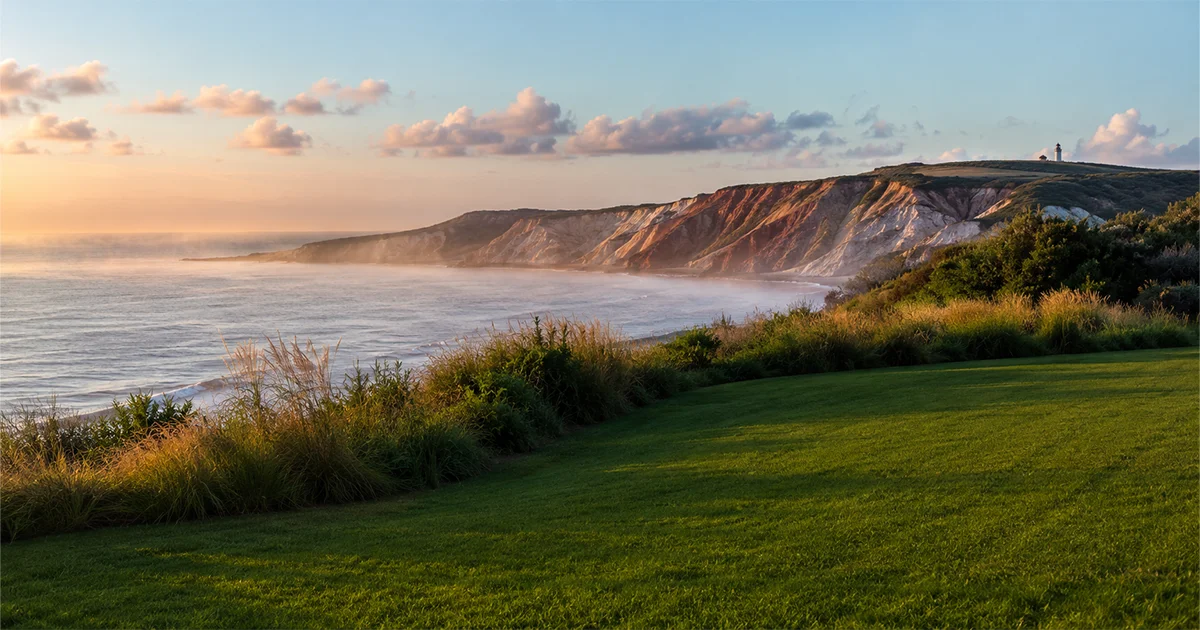
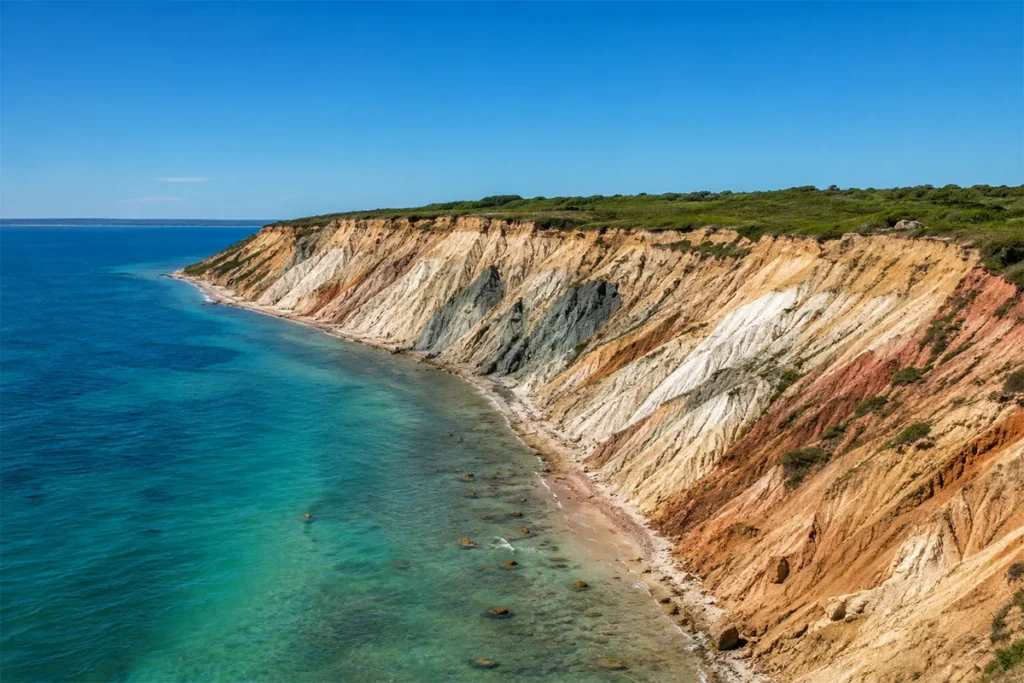
Aquinnah rises 130 to 150 feet above the Atlantic at Martha’s Vineyard’s western tip. The Gay Head Cliffs were designated a National Natural Landmark by the National Park Service in 1965, a recognition of a geological formation that stretches back roughly 100 million years. This is the westernmost point on the island. There are no stoplights, no shopping centers, and very few year-round residents. The town’s distinctive landscape — clay bluffs, coastal heathland, native scrub — shapes everything here, including how its properties should be cared for.
This is the sixth and final article in our town-by-town series on Aquinnah lawn and property services. It is the most distinctive piece of the series, because Aquinnah is the most distinctive town. The Wampanoag Tribe of Gay Head (Aquinnah) has held sovereign land here for at least 10,000 years, including the cliffs themselves. That long stewardship has shaped how the town develops: slowly, carefully, with a deep respect for the land. It shapes how property care should work here, too.
For Estate Care, working in Aquinnah means understanding that maintaining a lawn is only part of the task. The real work is managing the relationship between the maintained space and the wild landscape that defines this place.
What Makes Aquinnah Different from Every Other Martha’s Vineyard Town?
Aquinnah’s combination of clay-based soil geology, open Atlantic wind exposure, and native coastal heathland creates property care conditions found nowhere else on the island. Most Aquinnah estates are large, naturalistic, and designed to feel like an extension of the landscape. The maintained turf — where it exists at all — is typically a smaller portion of the property than in any down-island town.
Down-island towns like Edgartown or Vineyard Haven have properties centered on lawn and garden, with well-defined edges and manicured beds. In Aquinnah, the “lawn” often transitions into native beach plum scrub, little bluestem grassland, or coastal heath. There are no curb-appeal conventions to follow. The goal is intentional beauty that respects the landscape’s natural character, not a uniform green carpet.
The Gay Head Soil Story: What the Cliffs Tell You About Your Lawn
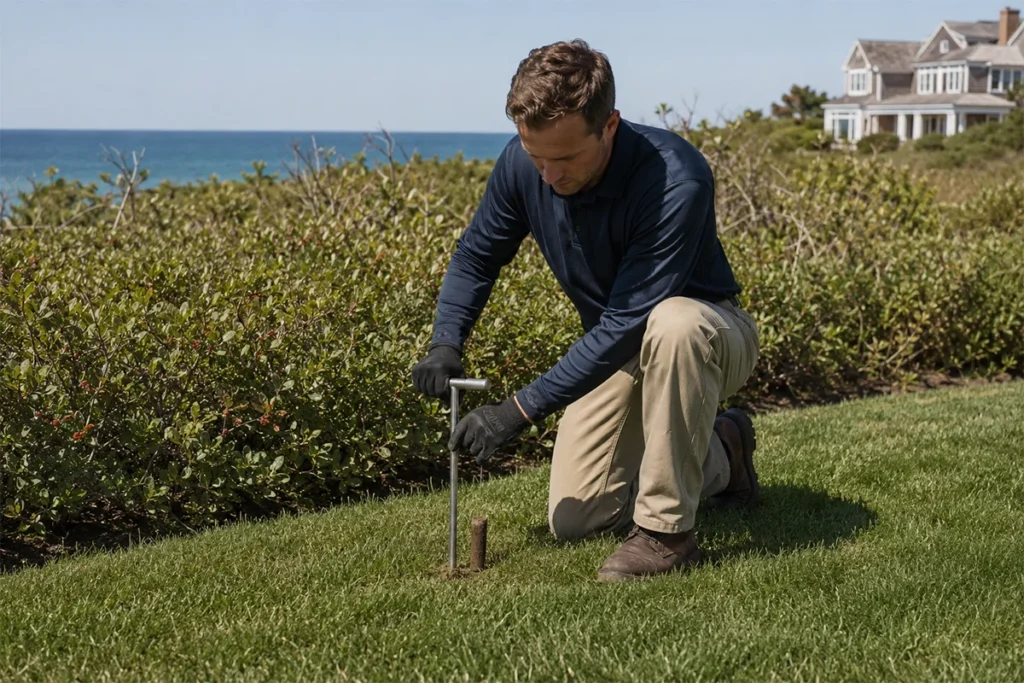
The Aquinnah Cliffs hold a geological record stretching from the Cretaceous period to the last ice age. Their multi-colored bands represent distinct sediment layers: clay minerals, sand, and glauconite (an iron-bearing mineral that gives the cliffs their distinctive green-gray streaks) deposited over millions of years. When the Laurentide ice sheet retreated roughly 12,000 to 19,000 years ago, it left behind the mixture of clay, sand, and gravel that formed Martha’s Vineyard’s terrain.
For property owners near the cliffs, that history has direct consequences. Clay soil holds water and nutrients more effectively than the sandy loam common in Edgartown or Vineyard Haven, but it compacts easily and drains slowly. Martha’s Vineyard Magazine documented how the Gay Head clay behaves differently from island soil elsewhere, noting that its density creates drainage challenges that don’t respond to the same fixes effective on sandy coastal soil.
In practice: standing water after rain, restricted root oxygen, and increased fungal pressure are all more common on clay-influenced Aquinnah lots. The sand-based irrigation approach that works in Edgartown can backfire badly on these soils. Research from the University of Maryland Extension confirms that clay soils need organic matter raised to 3 to 5 percent — compared to the average lawn’s 1 to 1.5 percent — and that gypsum is effective for improving drainage without altering pH.
None of this can be assumed from a street address. A soil test is the only reliable way to know what a specific Aquinnah lot actually contains before any lawn care treatment begins. Properties two roads apart can have meaningfully different soil profiles depending on their proximity to the cliff formations.
Does Salt Wind Damage Lawns Differently in Aquinnah?
Yes — and the difference is substantial. Aquinnah’s open Atlantic exposure means salt spray concentration is consistently higher than anywhere else on the island. Bluff-facing properties receive airborne salt from wave action and sea breeze almost continuously. The windward side of the lawn is the first to suffer: tip burn on grass blades, yellowing, slow spring green-up, and bare patches where salt accumulates.
According to coastal property research from Florida to New England, properties within 500 feet of open water face continuous salt deposition on grass blades and soil. Salt draws moisture out of turf through osmotic pressure, and it accumulates in the root zone over time. The solution is flushing: consistent, deep watering during dry periods to push salt below the root zone and prevent buildup. On an Aquinnah bluff property, this is not optional maintenance. It is a core part of keeping turf viable.
Which Grass Varieties Work Best on Aquinnah Properties?
On most Martha’s Vineyard properties, fine fescue blends and turf-type tall fescue perform reliably because they tolerate the island’s sandy, mildly acidic soils. On Aquinnah bluff properties exposed to direct Atlantic wind, grass variety becomes a more consequential decision.
Research on coastal New England sod varieties identifies creeping red fescue as the most salt-tolerant cool-season turf grass, with tall fescue as a strong secondary option for moderate traffic areas. Kentucky Bluegrass — the traditional “estate lawn” standard — is among the least salt-tolerant of common cool-season grasses. It struggles under persistent salt exposure and will thin progressively on an exposed Aquinnah position even with good general care.
For open, windward lawn areas, creeping red fescue blends are the right primary component. Tall fescue works well in more sheltered areas or spots with regular foot traffic. Massachusetts coastal landscaping guidance consistently recommends fine fescue species for exposed coastal positions over the bluegrass cultivars that dominate mainland lawn seed mixes. Our NOFA-certified lawn care programs use seed mixes selected specifically for island conditions, including Aquinnah’s intensified salt exposure.
How Do You Manage the Transition Between Lawn and Native Heathland?
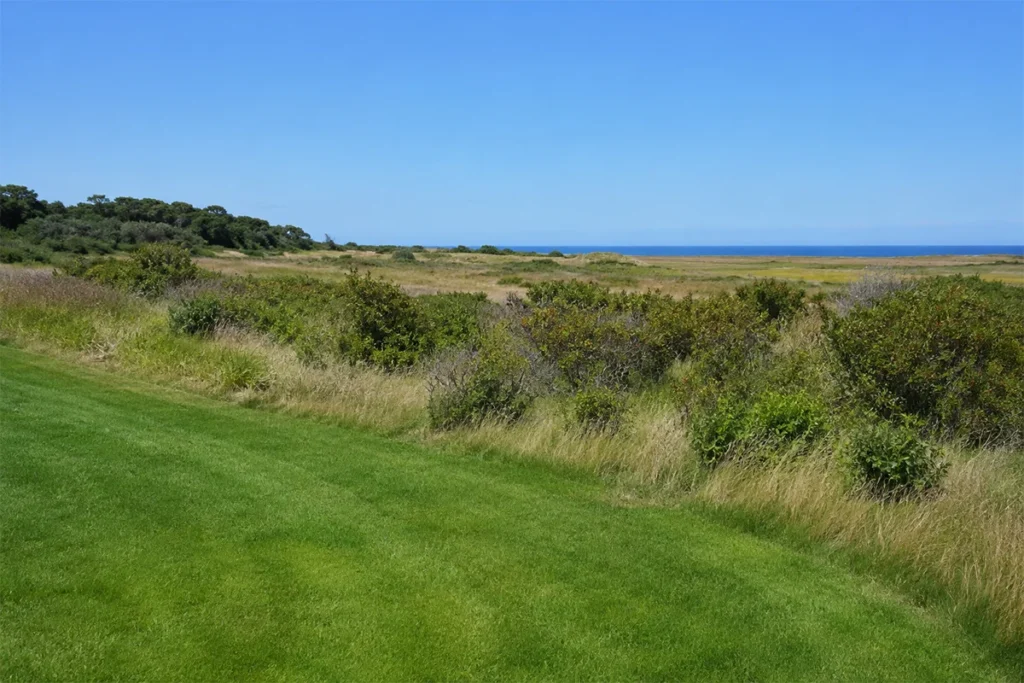
The maintained lawn on an Aquinnah property typically ends where the native coastal heath begins. Managing that boundary well — without suppressing the native vegetation or letting invasive species colonize the edge — is the most distinctly Aquinnah challenge in property care.
The Nature Conservancy has identified the up-island area as containing rare coastal plain heathland, a globally endangered habitat type that survives on Martha’s Vineyard in the form of native scrub oak, beach plum, bayberry, and little bluestem grassland. On a typical Aquinnah estate, the transition zone between maintained turf and this native vegetation is not a sharp line. It is a gradation: closely mowed lawn giving way to a managed native-plant buffer giving way to open heathland.
Keeping this zone intentional requires knowing which species to protect and which to remove. Little bluestem, the characteristic grass of sandplain grasslands, is a native species that belongs in the heathland transition zone. Mowed repeatedly, it disappears and leaves bare soil vulnerable to invasive grasses. Allowed to persist in the buffer, it provides low-maintenance, drought-tolerant, wildlife-supporting ground cover that feels native — because it is. Beach plum and bayberry serve similar roles: they can be shaped and maintained but should not be cleared entirely.
Our gardening and planting service includes this kind of native plant work: defining the boundary, selecting species for the transition zone, controlling invasive encroachment from either direction, and keeping the edge visually deliberate without losing the heathland character that makes an Aquinnah property feel like Aquinnah.
A Year-Round Aquinnah Property Care Calendar
Most Aquinnah homeowners are seasonal: present in summer, away for six months or more. The property needs active management year-round. Here is what a full-year plan looks like on a typical mid-size Aquinnah estate.
| Season | Core Tasks |
|---|---|
| Spring (April-May) | Property opening; soil testing; winter salt damage assessment; first mowing; transition zone inspection for invasive emergence |
| Early Summer (June-July) | Irrigation calibration; bluff-edge salt-flush watering schedule; heathland border management; summer mowing program |
| Late Summer (Aug-Sept) | Fall aeration booking; post-storm site assessment; hedgerow and native scrub pruning before growth hardens |
| Fall (Oct-Nov) | Core aeration and overseeding; organic fertilization per soil test results; full seasonal cleanup service; storm prep and winterization |
| Winter (Dec-March) | Storm response for estate management clients; documented site checks; spring prep reporting and scheduling |
For absentee owners, the complete property care program bundles all of this into a single annual contract with a documented post-visit report after every service. When a storm moves through and the owner is off-island, a same-day or next-day site visit happens automatically. The owner receives a written record. No guessing about what the property looked like in November.
What to Look for in an Aquinnah Property Care Partner
Aquinnah’s conditions are specific enough that generic island lawn care will miss the details that matter. Before hiring any property care team here, ask four questions:
- Do you do soil testing, and do you adjust your approach based on clay content versus sandy loam?
- What grass varieties do you recommend for open, bluff-facing positions with high salt spray exposure?
- How do you manage the transition between maintained turf and native coastal vegetation?
- Do you have storm response capability for properties whose owners are off-island?
A team working regularly across Aquinnah, Chilmark, and the up-island area will have specific answers. A team that primarily works down-island may not.
Estate Care manages 150+ properties across all six Vineyard towns and holds NOFA accreditation for organic land care. Aquinnah requires a different kind of attention. It tends to reveal, quickly, whether a property care team genuinely knows the island.
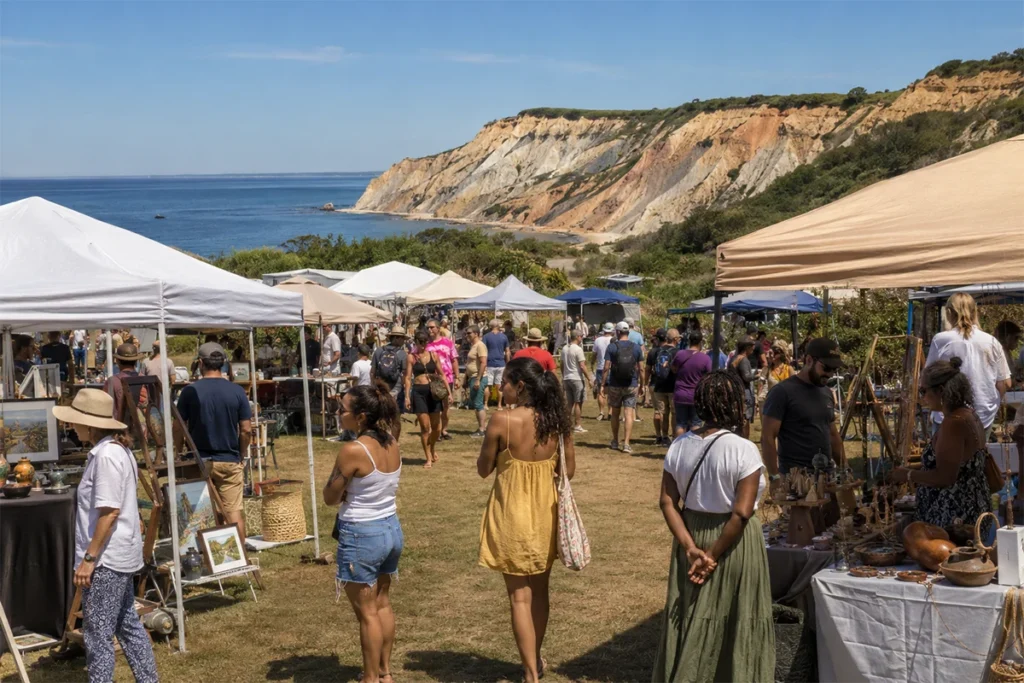
On July 18, 2026, Aquinnah Circle hosts the 19th Annual Native Artisan Market and Festival, organized by the Aquinnah Cultural Center with the Wampanoag Tribe of Gay Head (Aquinnah). The event runs from 11 a.m. to 4 p.m. and is free and open to the public. If you are visiting your Aquinnah property this month, it is worth seeing. It is a reminder that this land has been stewarded with great care and intention for a very long time. The best property care in Aquinnah works in the same spirit.
If you own property in Aquinnah and want a care plan built around your land’s actual conditions, request a complimentary site visit for your Aquinnah property or get a quote and we will come to you.
Frequently Asked Questions
What kind of soil does Aquinnah have?
Aquinnah has a variable soil profile shaped by the Gay Head Cliffs’ geology. Properties near the cliffs often have clay-influenced soil with slower drainage and higher water retention than the sandy loam common in Edgartown or Oak Bluffs. Further from the cliff formations, sandy coastal soil is more typical. A soil test is the only reliable way to know what a specific Aquinnah lot actually contains, since properties a short distance apart can have meaningfully different profiles.
Does salt wind damage lawns differently in Aquinnah than other Martha’s Vineyard towns?
Yes. Aquinnah’s open Atlantic exposure, particularly on bluff-facing properties, means salt spray concentration is consistently higher than elsewhere on the island. The windward side of the lawn is most vulnerable to tip burn, slow spring green-up, and bare patches. Regular deep watering during dry periods flushes accumulated salt below the root zone and is an essential part of maintaining turf on any Aquinnah bluff property.
Which grass is best for an exposed Aquinnah lawn?
Creeping red fescue is the most salt-tolerant cool-season turf grass and is the recommended primary component for open, windward positions on Aquinnah properties. Research on coastal New England sod confirms that Kentucky Bluegrass, despite being a popular estate lawn choice, is among the least salt-tolerant cool-season grasses and will thin progressively under persistent Atlantic salt exposure. Tall fescue works well in more sheltered areas.
How do I manage the native heathland on my Aquinnah property without damaging it?
The goal is a clean, intentional transition rather than removal of native plants. On Aquinnah properties, this means maintaining a defined mow line, controlling invasive species from either side, and selectively managing native scrub — beach plum, bayberry, little bluestem, scrub oak — to preserve the heathland character while keeping the boundary visually deliberate. This work requires knowing which species to protect and which to manage back. Our gardening and planting service includes native plant management for up-island properties.
How often should an Aquinnah property be serviced if the owners are off-island for most of the year?
For seasonal absentee owners, a minimum program includes spring opening with soil assessment, bi-weekly summer maintenance, fall aeration and cleanup, and storm response after significant weather events. Most Aquinnah estate management clients add post-visit documentation so they always know what their property looked like during their absence. The complete property care program includes all of this under a single annual contract.
Related Articles.

Questions About Your Property?
Our team is always happy to talk through your specific situation - no commitment required.