

Getting Your Martha’s Vineyard Property Ready Before the Summer Season Opens
TL;DR: April is when off-island owners and vacation rental hosts need to start preparing their Martha’s Vineyard properties for summer. Salt air, frost heave on stone surfaces, stressed lawns, and winterized irrigation systems all need attention before Memorial Day. The best spring service windows fill fast on the island. Start your property opening plan now, not in May.
If you own a home on Martha’s Vineyard and you’re not here through the winter, you’re going back to a property that’s been on its own for five or six months. The island’s coastal conditions are hard on everything, from the lawn edges near the road to the stone patio out back to the irrigation pipes buried under that sandy soil.
The gap between an October close and an April open isn’t just time passing. It’s salt air working into every exposed surface. It’s freeze-thaw cycles quietly shifting your stone walkways by inches. It’s a lawn that went dormant under stress and needs more than a quick rake before it’s ready for summer guests.
We open dozens of properties across all six Vineyard towns every spring. The ones that are fully ready by Memorial Day weekend share one thing in common: they started the process early enough. Here’s what that process actually looks like.
What Actually Happens to a Martha’s Vineyard Property Over a Long Winter?
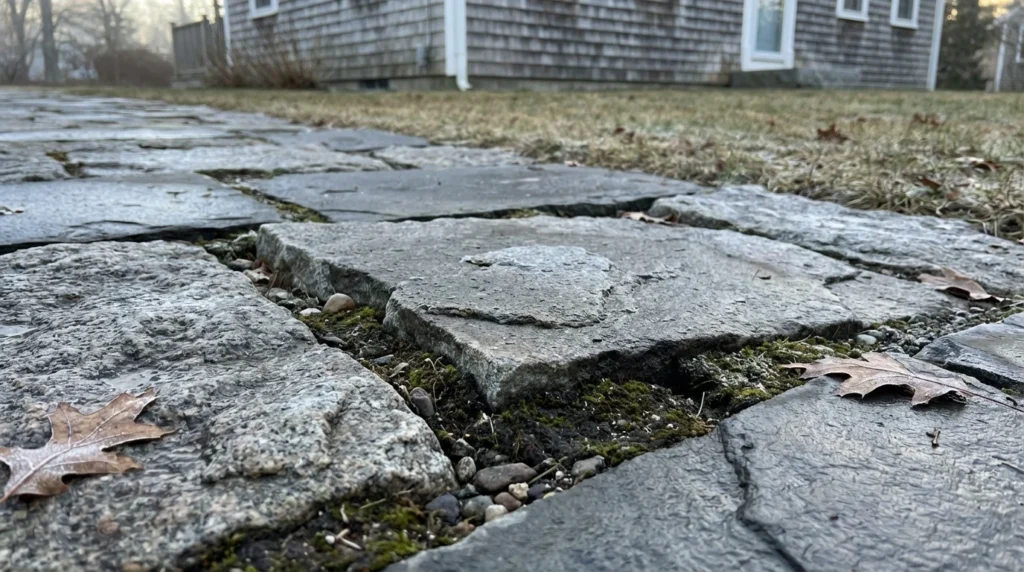
A coastal property left for winter doesn’t just sit still. Salt air, freeze-thaw cycles, and winter moisture work steadily on every exposed surface from October through March. By April, you’re typically looking at salt-bleached fence boards, shifted patio stones, a stressed and patchy lawn along the coastal edges of the property, and an irrigation system that needs careful inspection before it runs a single zone.
The island’s proximity to saltwater means salt air exposure is relentless through the winter months. Salt doesn’t just damage lawns. It works into wood grain, breaks down paint adhesion on trim and siding, and corrodes metal components on gates, fences, and irrigation fittings. At the same time, freeze-thaw cycles through a coastal New England winter put pressure on every hardscaped surface each time the temperature crosses 32°F. On Martha’s Vineyard, that can happen dozens of times between December and March.
Understanding what you’re walking back into helps you prioritize correctly, rather than spending your first week on cosmetic touch-ups while a cracked irrigation line quietly floods the lawn.
The Spring Opening Checklist: Four Areas to Cover First
Before any lawn crew or mason sets foot on your property, walk the full perimeter and assess four areas. What you find in each one determines what work is needed and in what order it has to happen.
Lawn and planted areas. Look for brown, straw-like patches near driveways, roads, and coastal-facing edges of the property. That pattern indicates salt damage, not simple dormancy, and it needs a targeted recovery response. Circular gray-white matted areas in the interior of the lawn usually point to snow mold, a fungal issue that develops under winter snow cover. A spring property cleanup to lift dead material and assess what’s recoverable should happen before any fertilizer or seed goes down.
Stone surfaces. Walk every paved path, patio, and stone border. Frost heave shifts pavers and flagstones out of level over winter, leaving lips, gaps, and tripping hazards that weren’t there in October. Note which sections have shifted and by how much. Minor releveling work and a full patio re-set have very different timelines, and both need to be scheduled before guests start walking those surfaces.
Irrigation system. Don’t run it before a full inspection. Winter freezes can crack lateral lines, damage valve heads, and compromise the backflow preventer. A smart irrigation startup involves a slow, zone-by-zone pressurization and a walkthrough during each zone’s cycle, not a full system activation from the controller.
Exterior surfaces. Check fence boards, deck railings, and painted trim for salt bleaching, paint bubbling, or soft spots in the wood. Coastal properties benefit from a professional exterior rinse every spring to remove winter salt buildup before summer heat and humidity lock it in deeper. This is one of the most commonly skipped steps, and it shows by August.
Why Does Frost Heave Keep Damaging Your Patios and Walkways?
Frost heave happens when water in the soil freezes and expands, pushing the ground upward and lifting whatever sits on top of it. On Martha’s Vineyard, the island’s sandy soil drains more freely than clay-heavy mainland soils, which reduces frost heave risk but doesn’t eliminate it. Any stone surface sitting over a base layer that retains moisture through winter is still vulnerable.
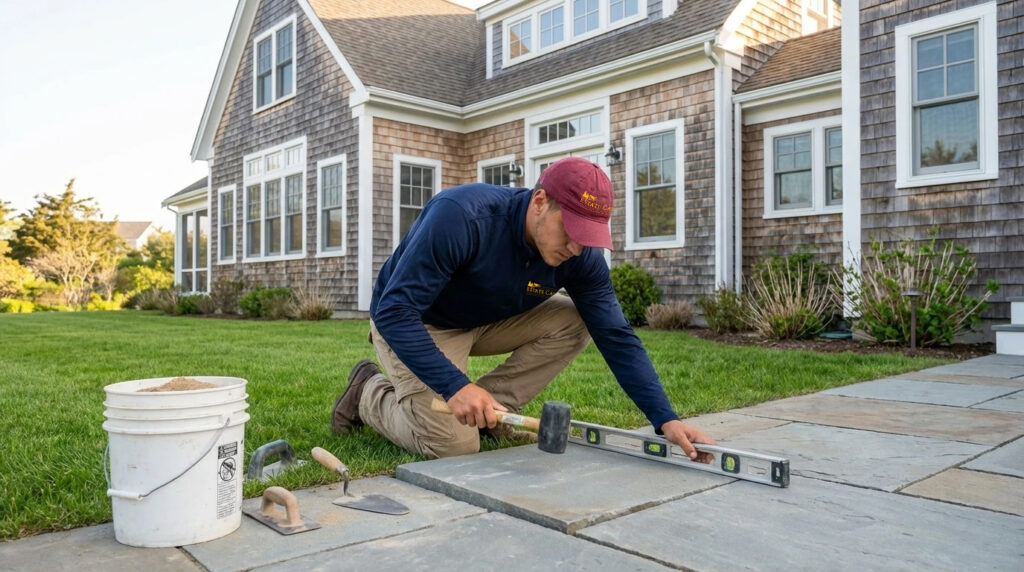
When the ice melts in spring, those surfaces settle unevenly, leaving lifted edges, joint gaps, and sections that now sit at different heights. The surface doesn’t simply return to where it was. For flagstone walkways, the repair usually means resetting individual stones and repacking the base layer. For mortared or interlocked paver patios, the repair is more involved: lifting the affected section, addressing the subsurface stability, and relaying the surface correctly.
The right time to assess and repair is April, before summer guests are using those surfaces. An uneven stone edge near an outdoor dining area is a safety issue as much as an aesthetic one. Our masonry team inspects every hardscaped surface during spring property openings and prioritizes repairs based on both safety and visual impact before the season starts.
When Should You Restart Your Irrigation System After Winter?
The right time to restart a winterized irrigation system on Martha’s Vineyard is after the soil is completely frost-free to at least 12 inches deep, which typically arrives in mid-April in a normal year. Starting too early, while frost lingers in the lower soil layers, risks cracking lateral lines that survived the winter intact.
The startup process should always begin with the backflow preventer, the component that keeps irrigation water from contaminating your home’s drinking water supply. Most Massachusetts municipalities require annual backflow testing. From there, open the main valve slowly, a quarter turn at a time, to let pressure build gradually. Opening it all at once can cause water hammer that splits a weakened pipe.
Run each zone manually and watch through a full cycle. Look for wet spots mid-zone (indicating a subsurface leak), heads that won’t pop up or retract fully, and any misting patterns that suggest a cracked or tilted nozzle. Running the system blind and assuming it’s fine is how a minor winter crack turns into a flooded turf section by June.
Does Curb Appeal Really Affect Your Vacation Rental Reviews and Bookings?
Yes, and more directly than most rental hosts expect. A guest’s first impression of a vacation rental is formed within the first seven seconds of arrival. That initial impression shapes how they experience everything inside, how they write their review, and whether they rebook. Platforms like Airbnb and VRBO use review scores to determine how prominently a listing appears in search results. A thin lawn, a cracked walkway, and salt-stained fence boards set a tone before guests even open the front door.
For rental hosts on Martha’s Vineyard, the stakes are higher than on most markets. Guests choosing the island are typically paying a premium for an experience that includes the property itself, not just the interior amenities. The exterior is part of what they’re paying for. When the lawn looks neglected and the stone path has weeds pushing up through the gaps, it reads as a mismatch between what the listing photos promised and what they arrived to find.
Getting the property in show-quality condition before your first guests of the season arrive means starting the work in April. Our seasonal cleanup program is designed specifically for rental hosts who need a dependable schedule from opening weekend through Labor Day.
Why One Property Partner Beats Five Separate Vendors
Managing a Martha’s Vineyard property from off-island means coordinating the lawn company, the irrigation technician, the mason, the landscaper, and the exterior cleaner by phone and text while you’re somewhere else entirely. That coordination can consume 15 to 20 hours in a single week when something unexpected comes up, and in spring, something unexpected almost always comes up.
The bigger risk isn’t your time. It’s the gaps between vendors. One crew completes the lawn cleanup and leaves a damaged stone edge unreported. The irrigation technician turns the system on before the masonry repair is done, and water pools against a freshly reset section of patio. When five vendors are on separate schedules and don’t communicate with each other, small issues compound into bigger ones fast.
Estate Care’s property care program gives you a single point of contact for the full scope of spring work: lawn assessment and cleanup, hardscape inspection and repair, irrigation startup, and landscape preparation. Everything happens in the right sequence, by people who know your specific property and know this island. After every visit, you receive a detailed written report covering what was found and what was addressed, whether you’re on-island to see it or not.
Memorial Day is the unofficial start of summer on Martha’s Vineyard, and the best spring service windows are already taken by mid-May. Reach out now for a spring consultation and we’ll build a program around your property’s actual needs before the season is upon us.
Conclusion: Ready by Memorial Day Means Starting in April
Spring property preparation on Martha’s Vineyard is a sequenced process across several weeks. Assess what winter left behind first. Repair what needs repairing. Then prepare the lawn and irrigation for the season ahead.
Off-island owners and rental hosts who are fully ready when summer opens share one habit: they don’t wait until they feel the pressure of incoming guests. They make a plan in April, book the right people early, and arrive to a property that’s already in shape.
We serve properties across all six towns on Martha’s Vineyard, from Edgartown and Oak Bluffs to Chilmark and Aquinnah. If you want your property professionally prepared before the season opens, request a free spring consultation and we’ll take it from there.
Frequently Asked Questions
When should off-island homeowners start spring property prep on Martha’s Vineyard?
April is the right window, not May. The goal is to have the full property assessed and any repair or restoration work completed before Memorial Day weekend, which marks the unofficial start of summer on the island. Spring contractor availability on Martha’s Vineyard fills up quickly, especially for masonry, irrigation, and lawn care. Waiting until late April or May typically means accepting gaps in scheduling that push work into the early season itself.
What does frost heave actually do to a patio or stone walkway?
Frost heave occurs when water in the soil freezes and expands, physically pushing the ground upward and lifting stone surfaces along with it. When the ice melts in spring, the ground settles unevenly and the stone does not return to its original position. This leaves lifted edges, joint gaps, and uneven sections that create tripping hazards and drainage problems. Most frost heave damage requires resetting and re-leveling the affected area, not just patching the joint gaps.
Is it safe to restart an irrigation system right after the snow melts?
Not right away. The soil needs to be frost-free to at least 12 inches deep before safely restarting a winterized irrigation system. Starting too early risks cracking lateral lines that are still under residual ground freeze pressure. The proper startup also involves a slow valve-opening sequence, a zone-by-zone inspection for damaged heads and subsurface leaks, and a backflow preventer check, which is an annual requirement in most Massachusetts municipalities.
Why does curb appeal matter so much for Martha’s Vineyard vacation rental hosts?
Guests form their first impression of a vacation rental within seconds of arriving, and that impression shapes their entire stay and the review they leave afterward. On platforms like Airbnb and VRBO, review scores directly influence search visibility and booking frequency. On Martha’s Vineyard, where guests are paying a premium for the full island property experience, the exterior condition is part of what they’re evaluating. A well-maintained lawn and clean, level stonework signal that the property is looked after.
What makes Estate Care’s property care program different from hiring individual vendors separately?
Estate Care’s property care program provides a single point of contact for the full scope of spring work, including lawn cleanup, hardscape inspection and repair, and irrigation startup. When all the work flows through one team that knows your property and coordinates across trades, tasks happen in the right sequence, nothing falls through the gaps between separate crews, and you receive a detailed post-visit report after every service. For off-island owners, that coordination and documentation is often the most valuable part of the program.
Related Articles.


Questions About Your Property?
Our team is always happy to talk through your specific situation - no commitment required.