
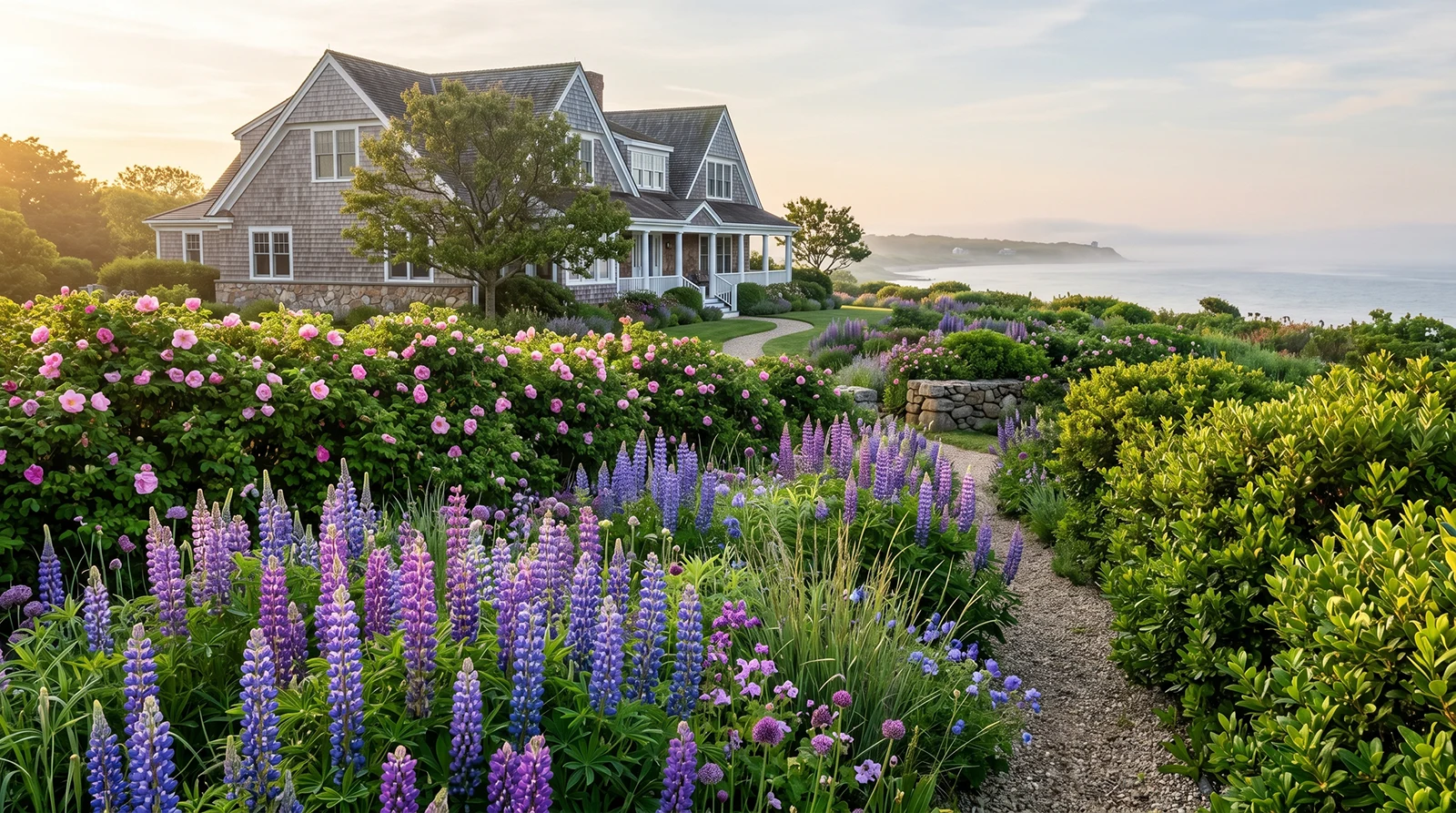
Native Plants for Martha’s Vineyard Gardens (And Where to Use Them)
TL;DR: Native and island-adapted plants outperform conventional garden choices on Martha’s Vineyard because they’re built for the island’s sandy soil, salt air, and coastal moisture cycles. The right plant in the right spot, beach rose and bayberry along coastal exposures, echinacea and salvia in full-sun beds, ferns and astilbe in sheltered shade – eliminates the need for synthetic fertilizers, reduces irrigation demand, and supports the island’s native pollinators. This guide organizes the best options by growing condition so you know exactly where each plant belongs.
Martha’s Vineyard is not a typical gardening environment. The island’s sandy, fast-draining soils hold far fewer nutrients than the loam-heavy ground common on the mainland. Salt air reaches farther inland than most off-island homeowners expect. Wind patterns, coastal fog, and microclimates vary considerably between Edgartown’s open harbor edges and the sheltered woodlands of West Tisbury and Chilmark. What grows reliably in a suburban Connecticut border often struggles through its first full season on the Vineyard.
Native plants, and the coastal-adapted species that have naturalized here over generations, have already solved that problem. They evolved alongside these exact conditions. Their root systems work with sandy, low-fertility soil rather than against it. They tolerate the salt spray that leaves ornamental plantings scorched and thin by late summer. They support the island’s native pollinators, from bumblebees to migrating monarch butterflies, in ways that non-native species rarely replicate.
The Estate Care plants directory includes individual profiles for 150+ species suited to island growing conditions. This guide pulls out the strongest performers by category and explains where each one belongs in a Martha’s Vineyard garden. Whether you are starting from scratch or adding resilient species to an existing landscape, the goal is the same: plants that thrive here, on this island, without constant intervention.
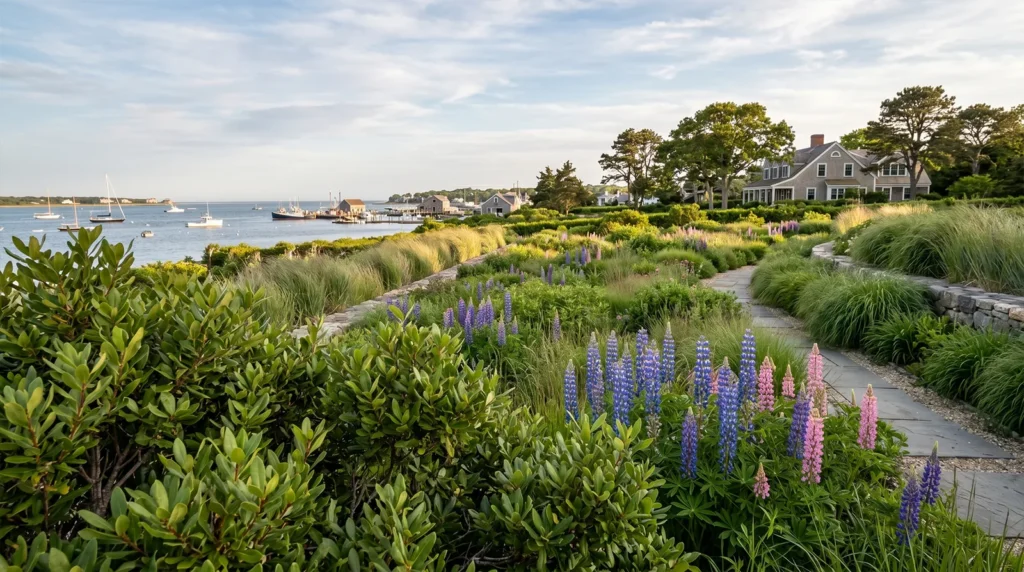
Why Native Plants Are Built for Martha’s Vineyard’s Conditions
The fundamental advantage of native plants on Martha’s Vineyard is that they require no adjustment period. They do not need amended soil, extra irrigation through establishment, or protection during a difficult first winter. They already know how to grow here.
Martha’s Vineyard’s sandy coastal soils are low in organic matter and drain quickly – conditions that stress many common landscape plants that prefer richer, moisture-retaining ground. Native species like bayberry, lupine, and beach rose have root architectures that extract what they need from lean, well-drained soil without supplemental feeding. They don’t deplete themselves trying to compensate for conditions they weren’t built for.
Salt air is the second major filter. Coastal winds carry salt farther inland than most property owners realize, and many common ornamentals show tip burn, leaf scorch, and progressive dieback after their first full season on island. Natives that evolved in coastal New England have developed the cellular mechanisms to handle salt exposure and site themselves naturally in positions where exposure is manageable.
The third factor is the island’s pollinator ecosystem. Martha’s Vineyard supports an unusually rich community of native bee species, butterflies, and beneficial insects. Exotic ornamentals, even visually striking ones, often provide little nutritional value to these pollinators. Native plants and their co-evolved insect partners developed together over millennia, and planting for pollinators on the Vineyard means choosing from this regional palette. For a broader look at why this approach connects to the island’s ecological health, the eco-friendly lawn care guide covers the full picture.
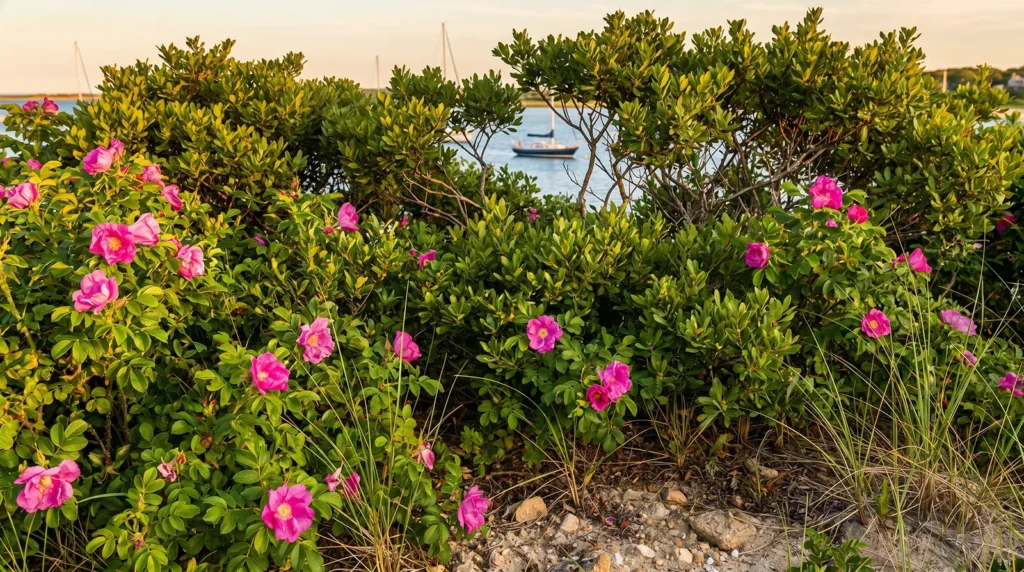
Best Native Plants for Full Sun and Coastal Exposure
Full sun, salt exposure, and sandy soil define the outer edges of most Vineyard properties. These are exactly the zones where non-native ornamentals struggle most and where native coastal species perform at their best.
Beach Rose (Rosa rugosa)
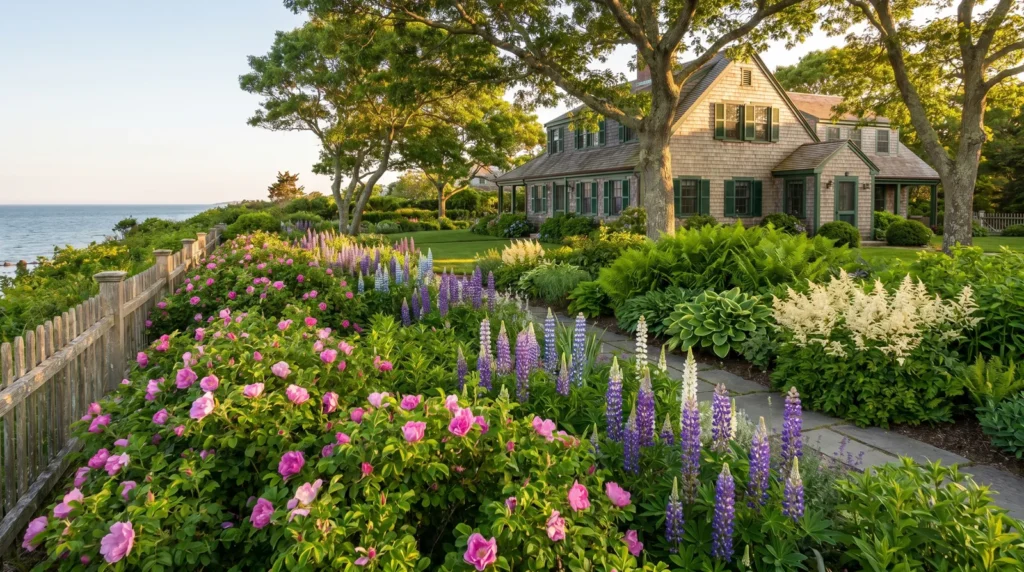
Beach rose is one of the defining plants of Martha’s Vineyard’s coastal landscape. It handles salt spray, strong winds, and lean sandy soil with ease, producing fragrant pink and white blooms from May through summer and large red rose hips that persist through fall and winter. It spreads naturally to form dense, wildlife-supporting hedges and requires almost no care once established. Explore the beach rose plant profile for spacing guidance and companion planting suggestions.
Bayberry (Morella caroliniensis)
Bayberry is a true New England coastal native and one of the most reliable shrubs for open, exposed positions on the Vineyard. Its aromatic gray-green foliage is salt-tolerant, and the waxy silver berries it produces in fall and winter provide critical food for migrating birds. It grows in both dry sandy soils and slightly moist areas, making it versatile across different property zones. See the bayberry plant profile for placement options and growing details.
Wild Blue Lupine (Lupinus perennis)
Lupine is one of the most visually dramatic native plants for Martha’s Vineyard gardens. Its tall blue-purple flower spires appear in late spring and are a consistent draw for bumblebees and hummingbirds. As a nitrogen-fixing legume, lupine actively improves poor, sandy soil as it grows – a significant advantage on the Vineyard where soil fertility is naturally low. It self-seeds over time, naturalizing steadily in open, sunny positions. Visit the lupine plant profile for timing and ideal site conditions.
Purple Coneflower (Echinacea purpurea)
Echinacea is a workhorse plant for full-sun beds across all six Vineyard towns. It tolerates drought, poor soil, and coastal humidity with equal reliability. Its bold pink-purple flowers appear from June through August, and the seed heads that follow feed goldfinches through winter. It pairs naturally with salvia, ornamental grasses, and bayberry in mixed native plantings. See the echinacea plant profile for cultivar selection and spacing.
Lavender and Salvia (Island-Adapted Sun Lovers)
While not native to New England, both lavender (Lavandula) and salvia have proven themselves as highly reliable performers in Martha’s Vineyard’s coastal, full-sun gardens. Both are Mediterranean in origin, which means they evolved in conditions of lean, well-draining soil, strong sun, and seasonal drought that closely mirrors what they encounter on the Vineyard. They support pollinators generously, require minimal inputs, and blend naturally with true native plantings.
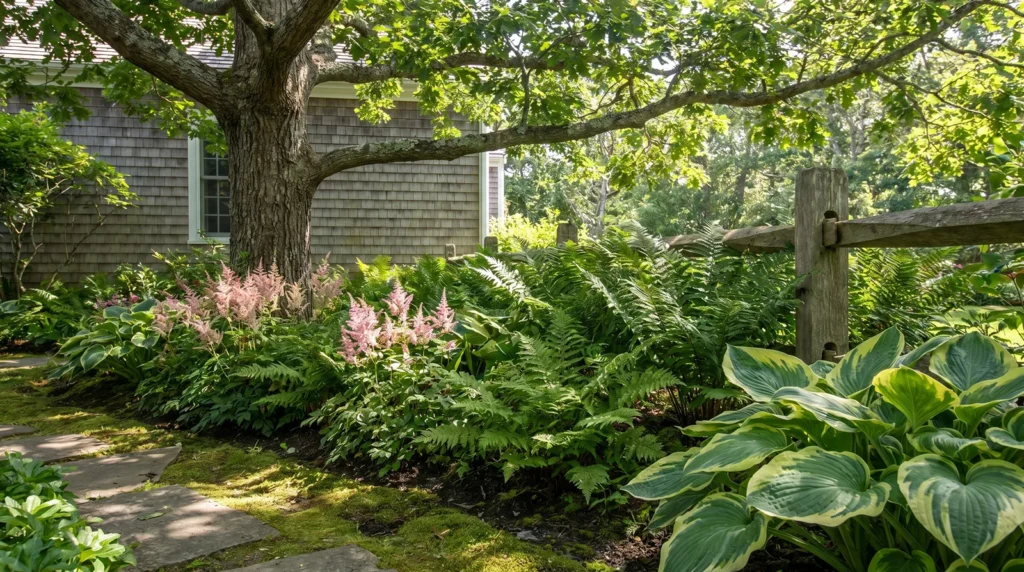
Best Native Plants for Partial Shade on Martha’s Vineyard
Not every part of an island property is open and windswept. The sheltered sides of houses, the understory beneath mature oaks, and the transition zones where a coastal property meets inland woodland all offer different conditions: lower light, higher moisture retention, and less direct salt pressure. These are prime zones for shade-tolerant native species.
Native Ferns
Native ferns, including Ostrich Fern, Cinnamon Fern, and Royal Fern, are ideal for the moist, shaded areas that appear on the northern and eastern exposures of most island properties. They add year-round textural interest and spread gently to fill shaded ground without becoming invasive. They require no fertilization and thrive in the slightly acidic, organic-rich soil found beneath established trees. Browse the fern profiles for species comparison by moisture level and mature size.
Astilbe
Astilbe brings color to the shaded parts of a garden that most flowering plants will not touch. Its feathery plumes in white, pink, and red appear in early summer and hold their structure as they dry, providing textural interest through late season. It performs best in consistently moist, rich soil, making it an excellent choice for low-lying or partially shaded beds where moisture lingers longer than elsewhere on the property. See the astilbe plant profile for bloom timing and companion planting suggestions.
Foamflower (Tiarella)
Foamflower is a low-growing native groundcover for shaded garden beds. Its delicate white flower spires appear in early spring, and its heart-shaped leaves provide attractive coverage through the growing season. It spreads slowly via runners, making it useful for filling the base layer under trees or along the shaded edge of a mixed border. It is a natural companion to ferns and astilbe in woodland-style planting designs.
Hosta
Hosta is the most widely used foliage plant for shaded estate gardens on the Vineyard. Though not native to North America, its reliability in partial to full shade, tolerance of coastal humidity, and bold leaf texture make it a practical and versatile companion to true natives. It layers well beneath trees alongside ferns and astilbe, and its range of sizes and foliage patterns means it can function as a focal point or as a ground-filling backdrop depending on the design. Explore hosta varieties and profiles for the options best suited to Vineyard shade conditions.
Native Groundcovers: Low-Maintenance Alternatives to Traditional Lawn Edges
The edges between lawn and planting beds, the strips between driveways and gardens, and the slopes that are difficult to mow are all zones where native groundcovers outperform both turf grass and bare mulch over time. They eliminate edge maintenance, suppress weeds, and hold soil without any ongoing input.
Bearberry (Arctostaphylos uva-ursi) is the most reliable native groundcover for the Vineyard’s sandy, exposed conditions. Its dense mat of evergreen foliage suppresses weeds, holds soil on slopes, and produces small white flowers followed by red berries that feed birds through winter. It tolerates full coastal exposure, requires no irrigation once established, and needs no fertilization at any stage.
Creeping Thyme spreads gently between stepping stones and along planting bed edges, releasing fragrance when brushed and producing a carpet of small pink-purple flowers in summer. It handles full sun, lean soil, and drought with ease and supports bees heavily during its bloom period. It is one of the most practical choices for the spaces between stone paths and along low border edges.
Wild Ginger (Asarum canadense) is the go-to native groundcover for shaded, woodland-style areas. Its broad, heart-shaped leaves form a dense carpet that suppresses weeds effectively in the understory zones beneath mature trees. It spreads slowly and steadily, needs no care once established, and holds moisture in soil that would otherwise dry out under tree canopy.
How to Add Native Plants to an Existing Estate Garden Without Starting Over
Adding native plants to an established landscape does not require a full redesign. The most effective approach is to work with existing structure and fill gaps strategically, replacing the areas of highest maintenance burden rather than disrupting what is already performing well.
Start by identifying the zones where plantings consistently underperform. The sun-baked strip along the front property edge that needs replanting every two or three years. The shaded, dry area under a mature oak where nothing holds. The slope too steep to mow comfortably. These are the spots where a native replacement delivers the fastest payback: less maintenance, better appearance, more resilience over time.
The Plant Combinations guide is a useful starting point for identifying native species that layer well together. Thoughtful plant combinations do more than look attractive. They create mutually supportive growing environments that reduce intervention over time as canopy, mid-layer, and groundcover plants each do their part.
If you are working within an existing formal garden structure, natives integrate naturally within that framework. Echinacea and salvia work in traditional perennial border designs. Bayberry works as a hedge replacement. Beach rose works as a property boundary shrub. You do not have to abandon the aesthetic to move toward a more resilient, native-forward palette. Estate Care’s gardening services include native plant selection and installation as part of a complete garden design and planting process.
The NOFA-Certified Approach: Why the Right Native Selection Eliminates Synthetic Inputs
One of the most significant practical advantages of a native-forward garden on Martha’s Vineyard is that it reduces dependence on synthetic fertilizers, pesticides, and herbicides. Not as an ideological position, but as a direct result of the plants doing what they evolved to do.
Native species that are correctly matched to their growing conditions do not need fertilization. Bayberry is nitrogen-fixing. Beach rose thrives in poor soil. Lupine actively improves soil chemistry as it grows. When plants are not fighting their environment, they are not stressed — and stressed plants are what invite pest pressure, disease, and the cycle of inputs that follows.
Estate Care holds NOFA certification through the Northeast Organic Farming Association for organic land care. Every garden program we design is built around eliminating synthetic inputs wherever possible and supporting soil biology over time. This approach does not sacrifice results. It shifts the timeline: the first season establishes the plants; by the second and third season, a well-designed native garden largely manages itself.
For properties where eliminating synthetics from the lawn program is also a priority, the principles are the same across all organic land care work: work with the island’s natural systems rather than against them.
When to Bring In a Professional for Garden Design
Selecting individual native plants is straightforward. Designing a layered, multi-season garden that works across the specific microclimates of a Vineyard property — accounting for salt exposure, drainage patterns, light availability at different times of year, and the homeowner’s aesthetic goals — is a more complex undertaking.
For properties of any meaningful size, or for projects that involve integrating a native planting plan into an established formal garden, a professional consultation is the fastest path to a result that performs well across multiple seasons. We design and install gardens across all six Vineyard towns, from sun-exposed coastal estates in Edgartown and Oak Bluffs to the shadier, more sheltered properties up-island in Chilmark and Aquinnah.
Book a garden design consultation and we will assess your property’s specific conditions and build a planting plan around what will actually thrive on your land.
Conclusion: The Best Vineyard Gardens Start with the Right Plants
The gardens that age best on Martha’s Vineyard are built around plants that belong here. Native and island-adapted species do not fight the sandy soil, the salt air, or the coastal seasons — they are tuned to them. They support the island’s wildlife, require fewer inputs over time, and give a property a sense of place that exotic ornamentals rarely achieve.
Whether you are starting a new garden, filling in an existing border, or replacing struggling plantings in a high-maintenance zone, shifting toward native species is the single highest-leverage decision you can make for the long-term health and appearance of a Vineyard property.
Browse the full Estate Care plants directory to explore individual species profiles organized by growing condition. When you are ready to move from selection to installation, request a spring garden consultation and we will design a native planting plan built for your specific property.
Frequently Asked Questions
What are the best native plants for full sun on Martha’s Vineyard?
For full sun and coastal exposure on Martha’s Vineyard, the strongest performers are beach rose (Rosa rugosa), bayberry (Morella caroliniensis), wild blue lupine (Lupinus perennis), and purple coneflower (Echinacea purpurea). All four tolerate the island’s sandy, fast-draining soil and handle salt air without showing the stress damage that affects many non-native ornamentals. Lavender and salvia are excellent island-adapted additions to full-sun beds – though Mediterranean in origin rather than native to New England, they thrive in the same lean, sun-exposed conditions.
Do native plants need fertilizer on Martha’s Vineyard?
In most cases, no. That is one of their primary advantages on the Vineyard. Native plants matched to their correct growing conditions, bayberry in a lean sandy border, beach rose along a coastal edge, have evolved to extract what they need from low-fertility soil without supplemental feeding. Nitrogen-fixing species like lupine actually improve the soil as they grow. This is a core principle of NOFA-certified organic land care: the right native plant in the right place eliminates the need for synthetic inputs from the start.
What native plants work in the shade on Martha’s Vineyard?
The most reliable shade performers for Martha’s Vineyard gardens are native ferns (Ostrich, Cinnamon, and Royal Fern), foamflower (Tiarella), wild ginger for ground coverage, and astilbe for late spring color. Hosta, while not native to North America, is a dependable companion for shaded island gardens and layers well with true native species. For deep shade under mature oaks or on north-facing exposures, ferns and wild ginger are the most low-maintenance and long-lasting choices.
Can I replace my lawn edges with native groundcovers on Martha’s Vineyard?
Yes, and in many zones it is a better long-term choice than maintaining turf in areas where mowing is difficult or where grass consistently thins out. Bearberry (Arctostaphylos uva-ursi) is the most reliable native groundcover for the island’s sandy, exposed conditions – it requires no irrigation, no fertilization, and no mowing once established. Creeping thyme is ideal for sunny path edges and spaces between stepping stones. Wild ginger works well in shaded areas under tree canopy.
When is the best time to plant native plants on Martha’s Vineyard?
Spring and early fall are both strong planting windows for native species on Martha’s Vineyard. Spring planting gives natives the full growing season to establish before their first winter. Fall planting, ideally September through early October, takes advantage of cooler temperatures and reliable rainfall to support root development before the ground freezes. Avoid planting in the height of summer when the island’s sandy soil dries quickly and newly installed plants require intensive irrigation to get through the heat.
Questions About Your Property?
Our team is always happy to talk through your specific situation - no commitment required.